Solar
Lower sun, shorter days, cloud, shade and debris can reduce yield. Treat winter solar as a variable contribution rather than a guaranteed daily amount.

Electric liveaboard guide
A useful winter plan combines realistic solar expectations, dependable charging, controlled heating and a clear daily energy budget.
Winter changes the calculation
Solar contribution usually falls as lighting, heating controls, pumps and time spent aboard increase. The charging plan should therefore be designed for more than summer conditions.
Lower sun, shorter days, cloud, shade and debris can reduce yield. Treat winter solar as a variable contribution rather than a guaranteed daily amount.
The heat source, circulation pumps, controls and hot-water strategy all need to be considered in the energy and fuel plan.
Shoreline or generator support may become more important when cruising continues through low-generation periods.
Practical winter routine
Look at stored energy and recent demand, not percentage in isolation.
Compare solar and other charging with the day's domestic and propulsion use.
Schedule laundry, cooking and charging sensibly rather than stacking avoidable peaks.
Do not plan routine use around exhausting every available unit of energy.
Comfort is more than battery size
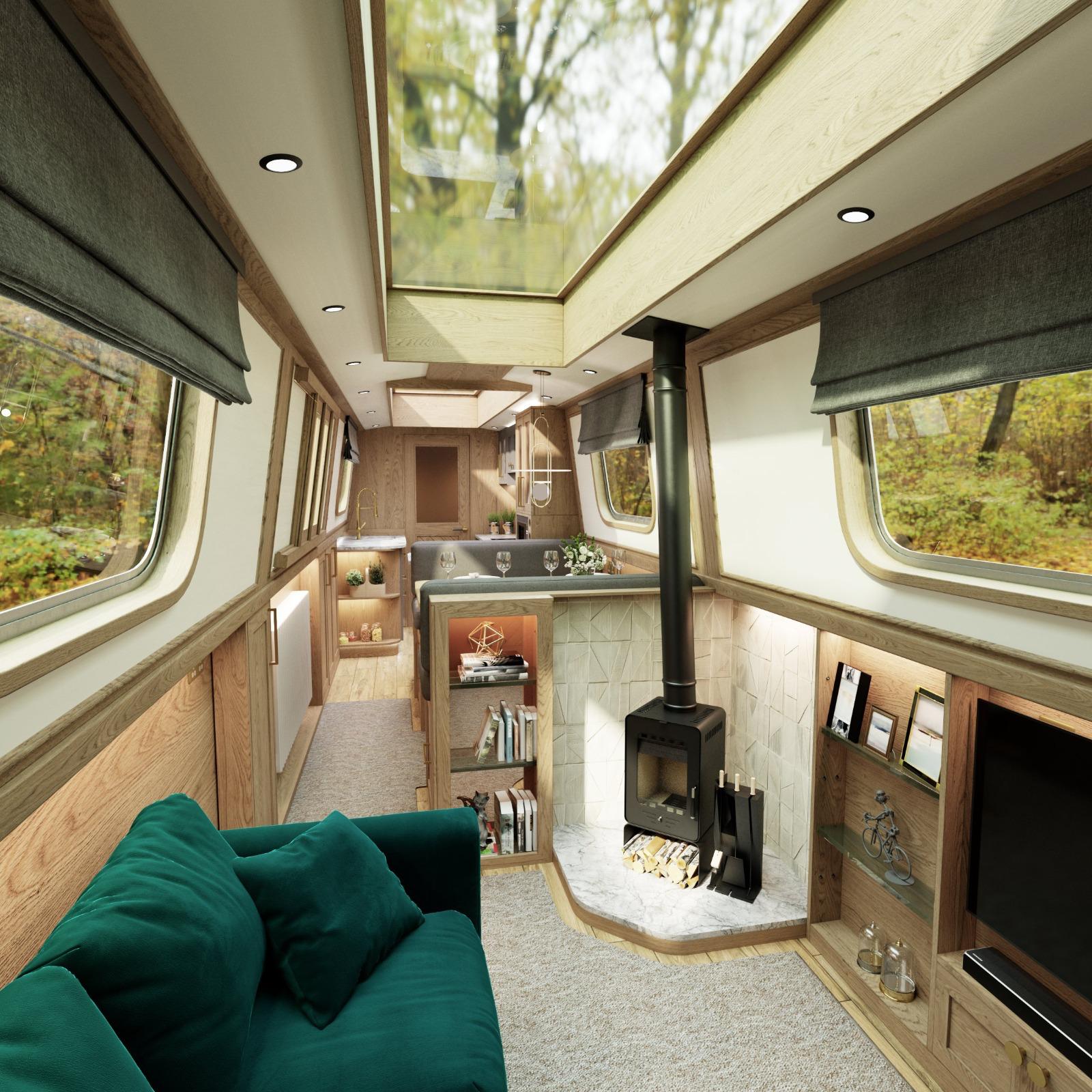
A comfortable liveaboard needs continuous insulation, controlled ventilation and a heating system that distributes warmth effectively. Restricting ventilation to retain heat can increase condensation and indoor moisture.
Questions buyers ask
Yes, when heating, domestic demand, charging access and battery reserve are planned around lower solar generation and the intended cruising pattern.
It should not be assumed. Winter output varies considerably with daylight, cloud, shading, temperature and panel condition.
Fixed ventilation should not be blocked. Reducing necessary ventilation can increase condensation and compromise safety; insulation, heating distribution and controlled extraction are better tools.
Plan your Oakums
Tell Oakums how you expect to cruise, live and recharge. We will relate the equipment choices to the boat and your intended use.