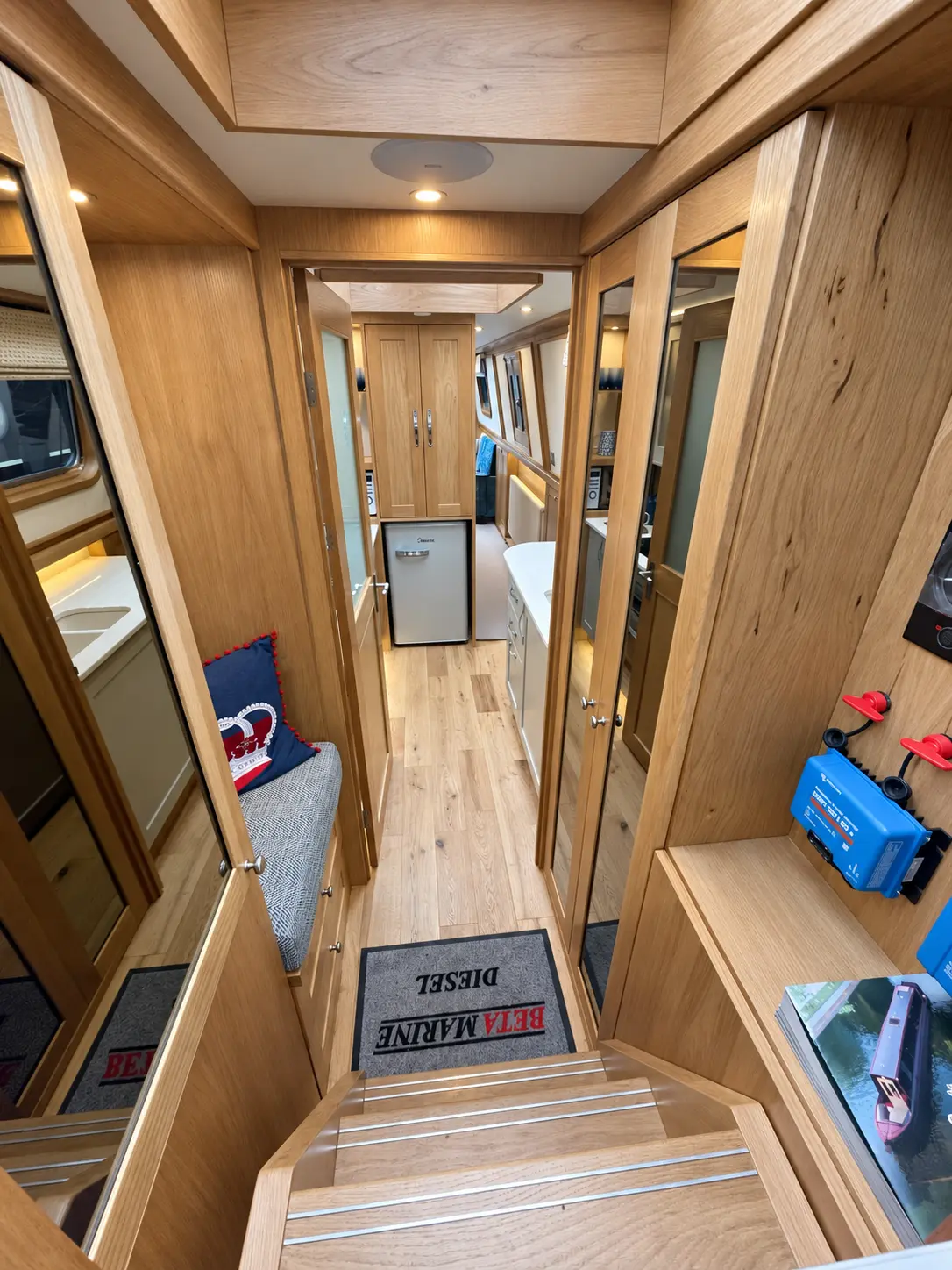
Integrated joinery
Built around the room
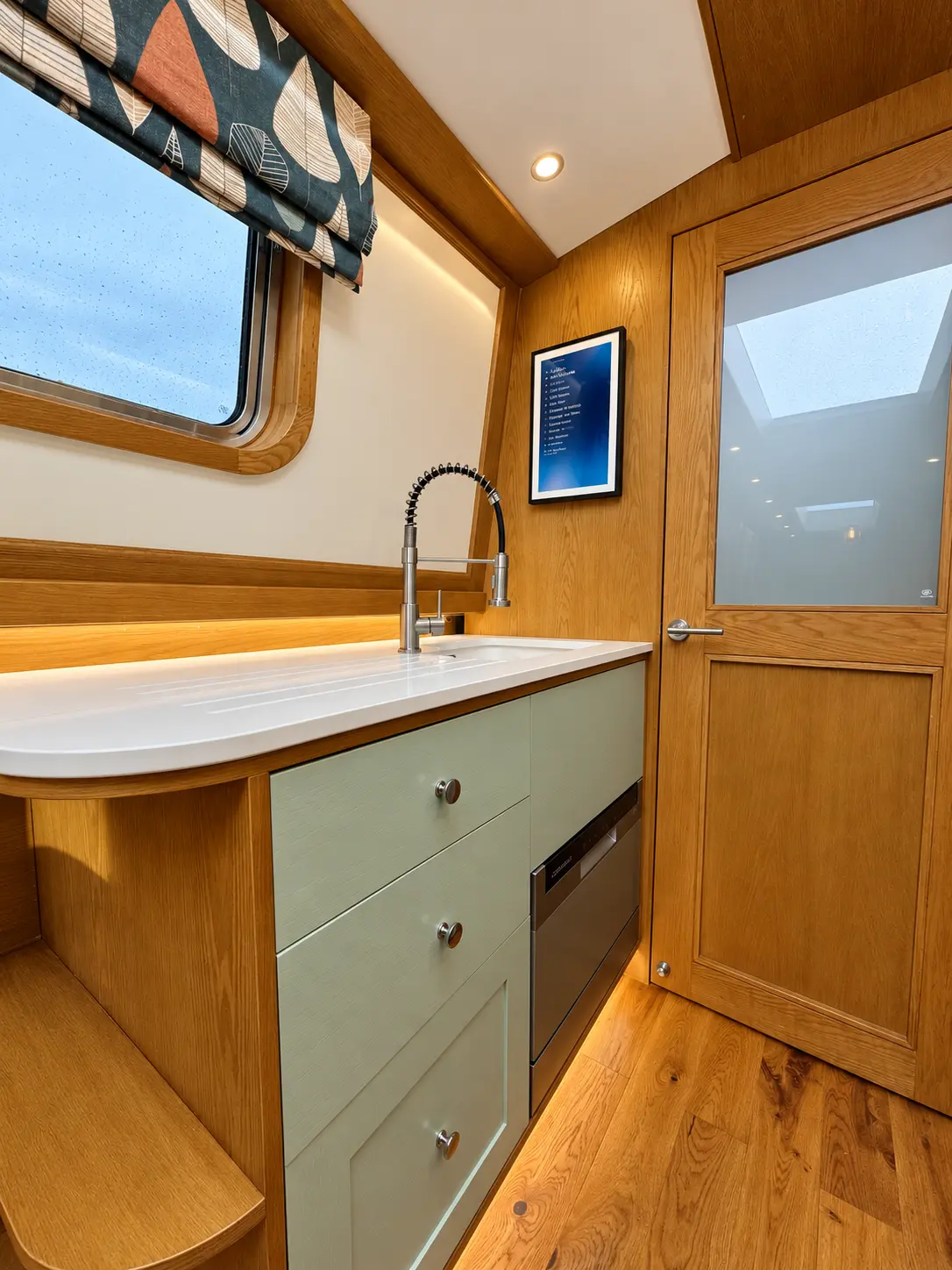
Cabinetry can define the architecture, hold essential possessions and preserve clean sightlines at the same time.

Narrowboat storage ideas
The most useful narrowboat storage is designed around daily behaviour, integrated into the architecture and positioned exactly where the contents are needed.
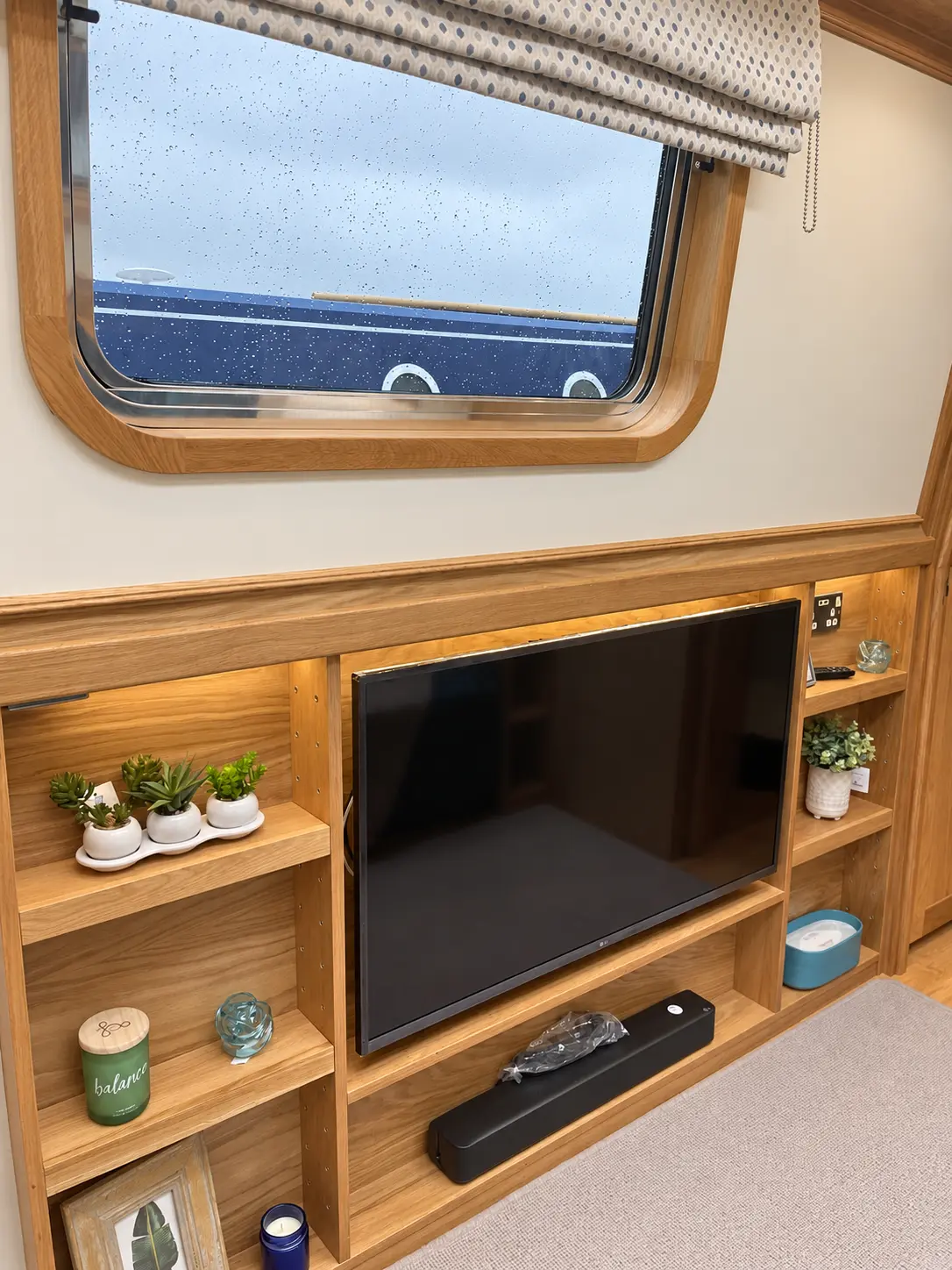
“Good storage removes effort as well as clutter.”
Capacity alone is not enough. Deep cupboards can become inaccessible, while small drawers in the right position can transform daily life.
Cabinetry can define the architecture, hold essential possessions and preserve clean sightlines at the same time.
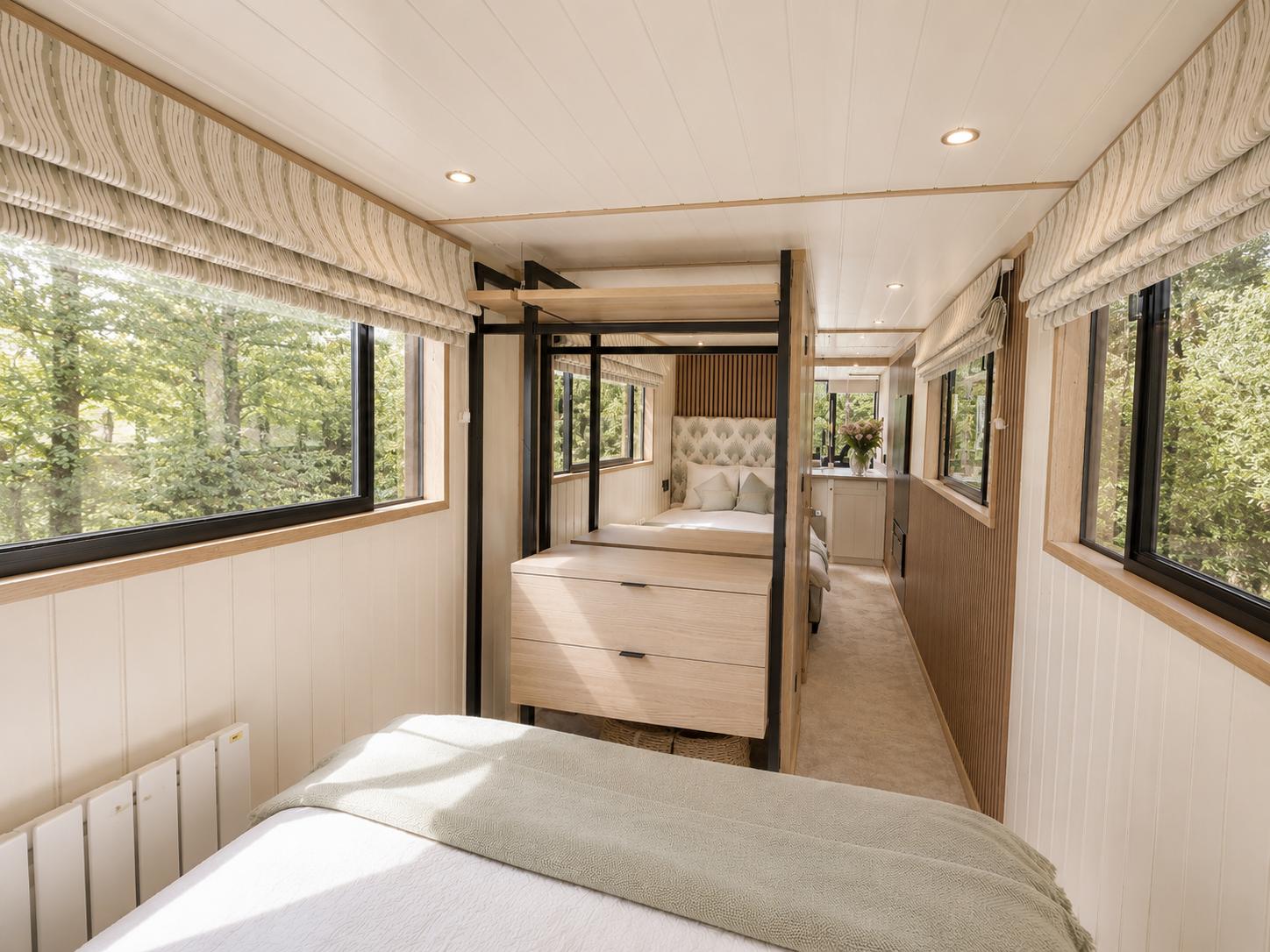
Provision, cleaning and utility storage works best when it sits naturally beside the activities it supports.
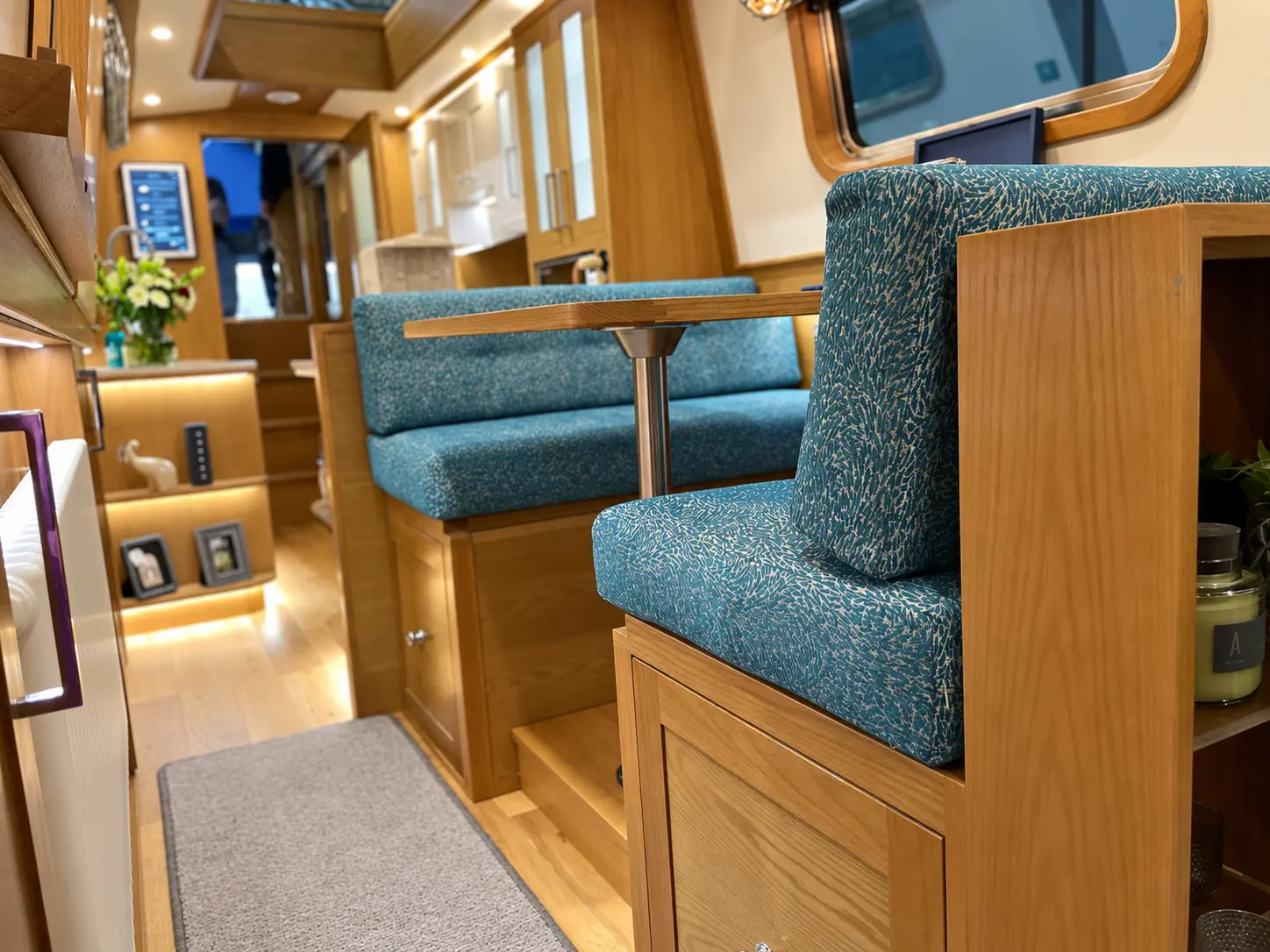
Seating and dining can conceal useful capacity without making every piece feel like a storage box.
Everyday items stay immediately accessible; seasonal equipment can occupy deeper spaces.
Heavy contents are positioned thoughtfully to support safe handling and sensible distribution.
Hinges, lids and drawers must open fully without furniture or people blocking them.
Storage can disappear visually while labels, lighting and internal divisions keep it usable.
Design perspective
A cabinet can provide storage, frame a view, carry lighting and establish proportion. Combining those roles creates more value than filling every available wall with cupboards.
Completed boats show how different briefs, palettes and priorities become individual interiors.
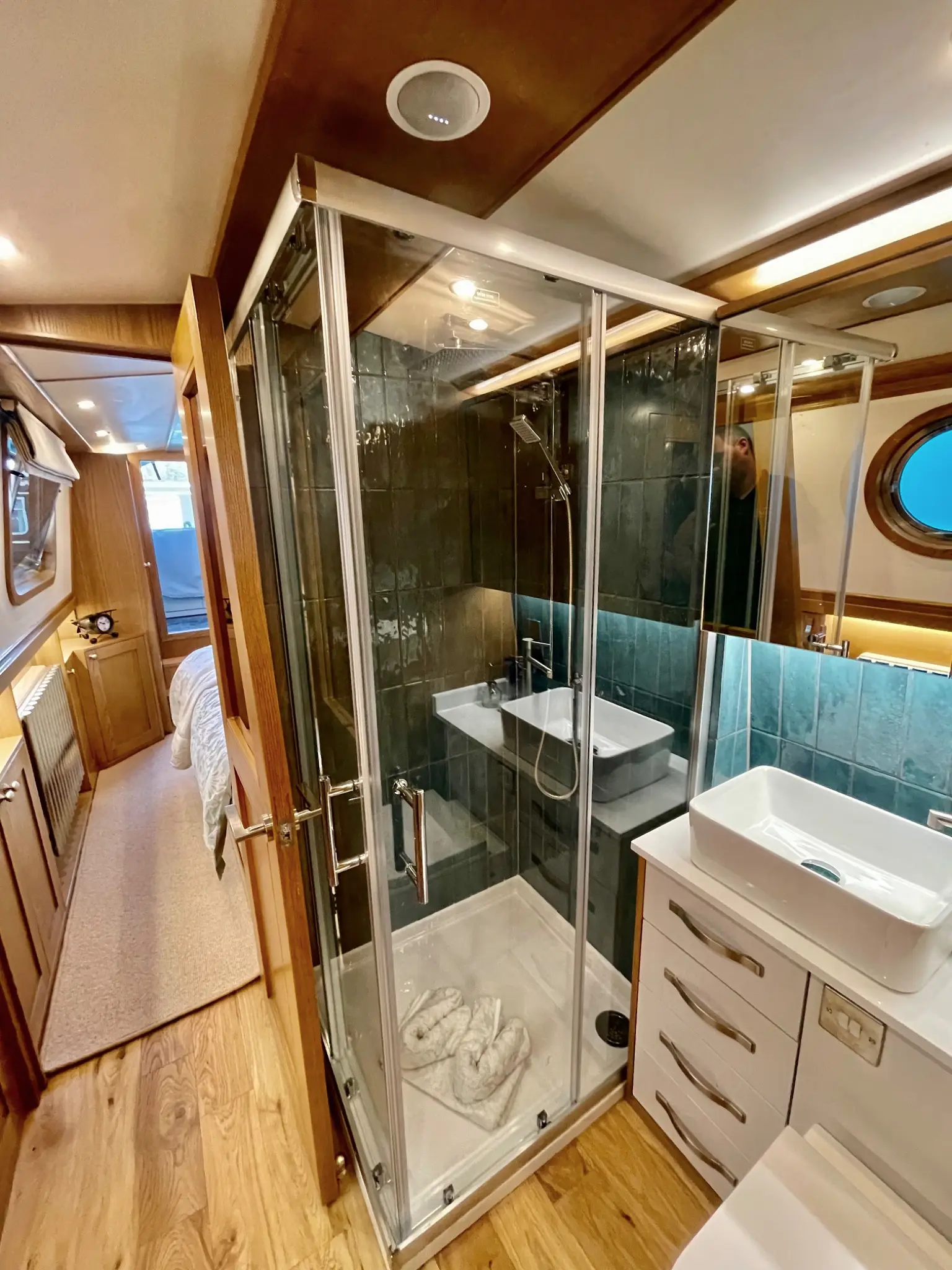
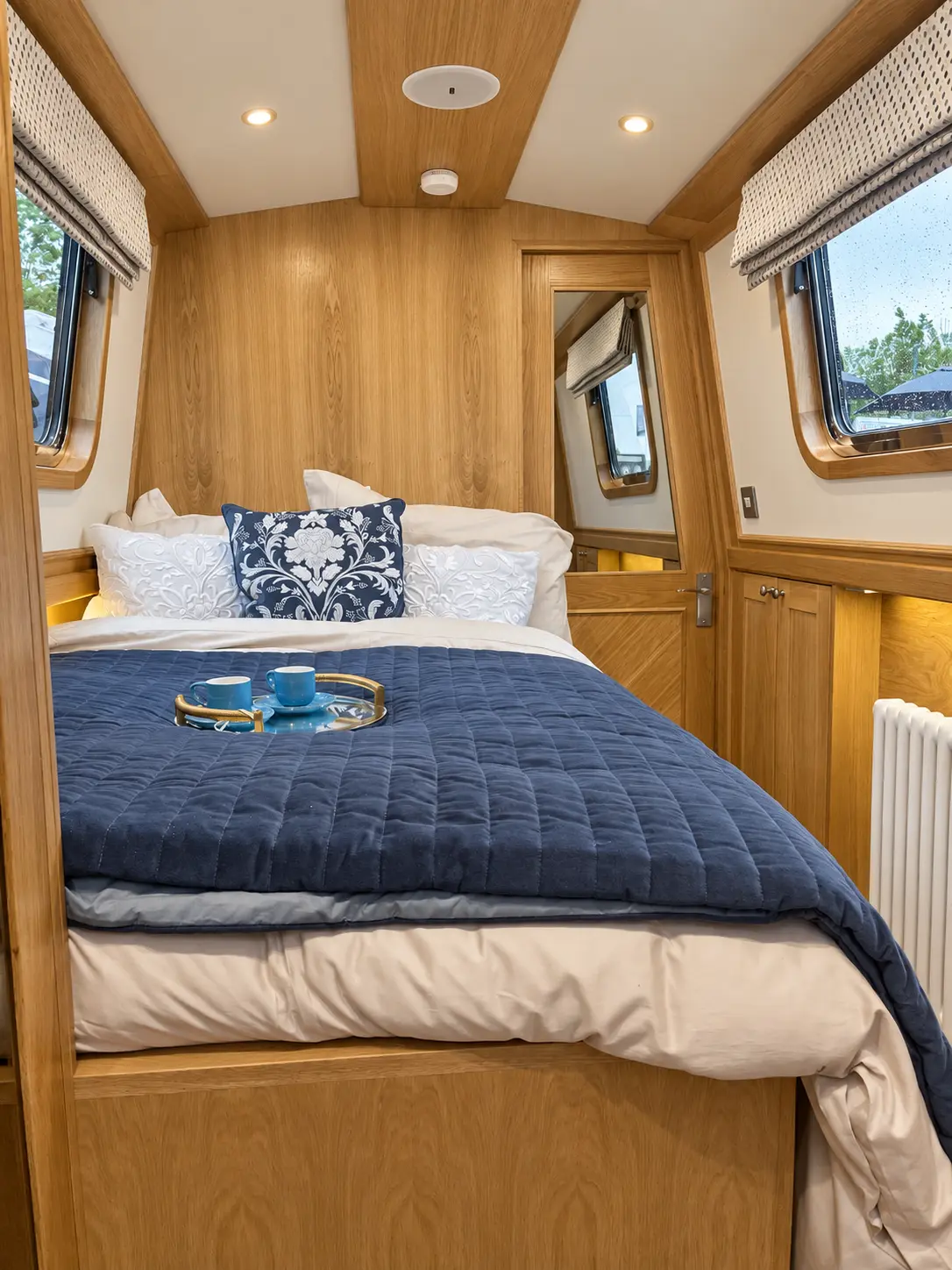
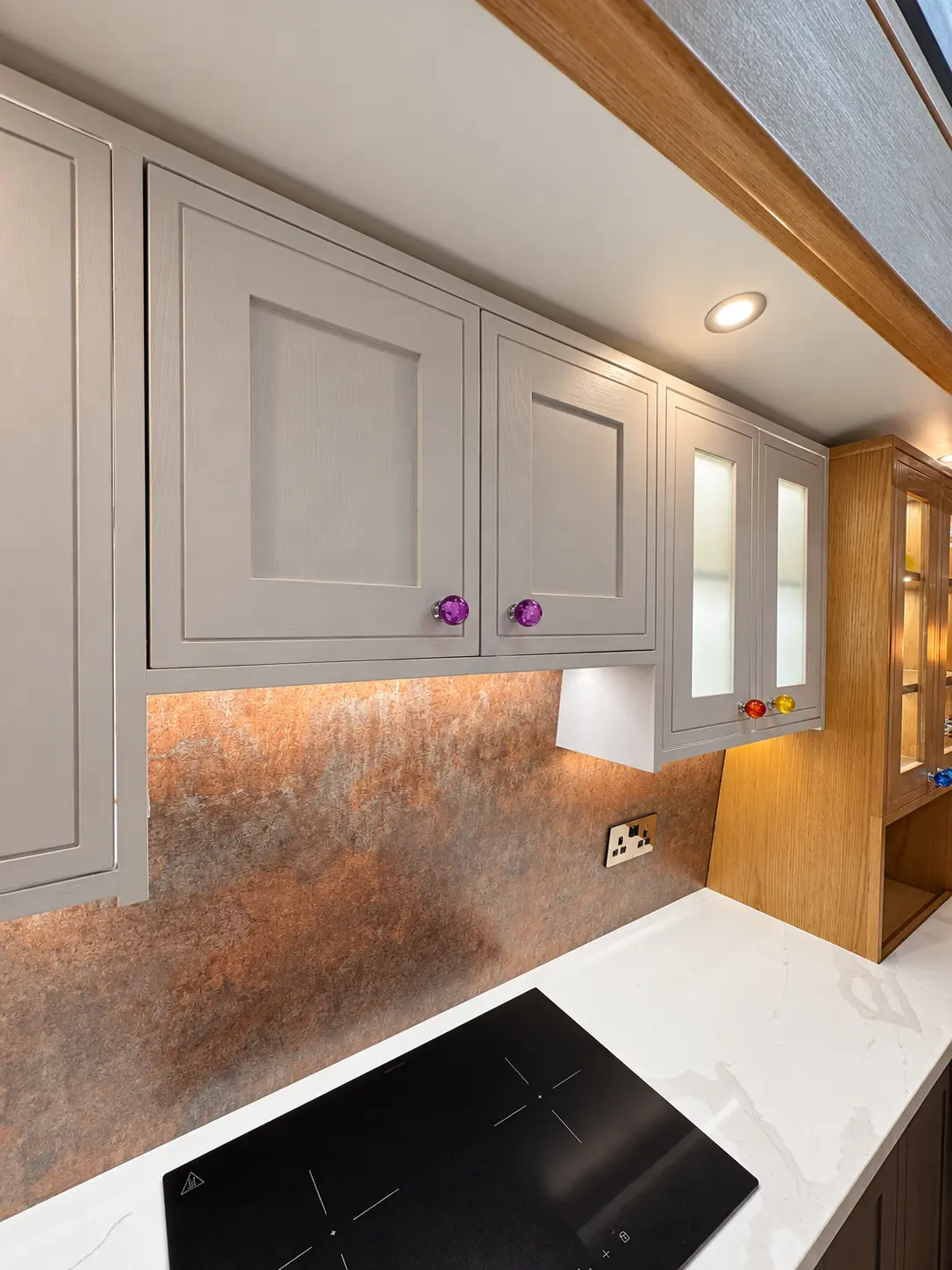
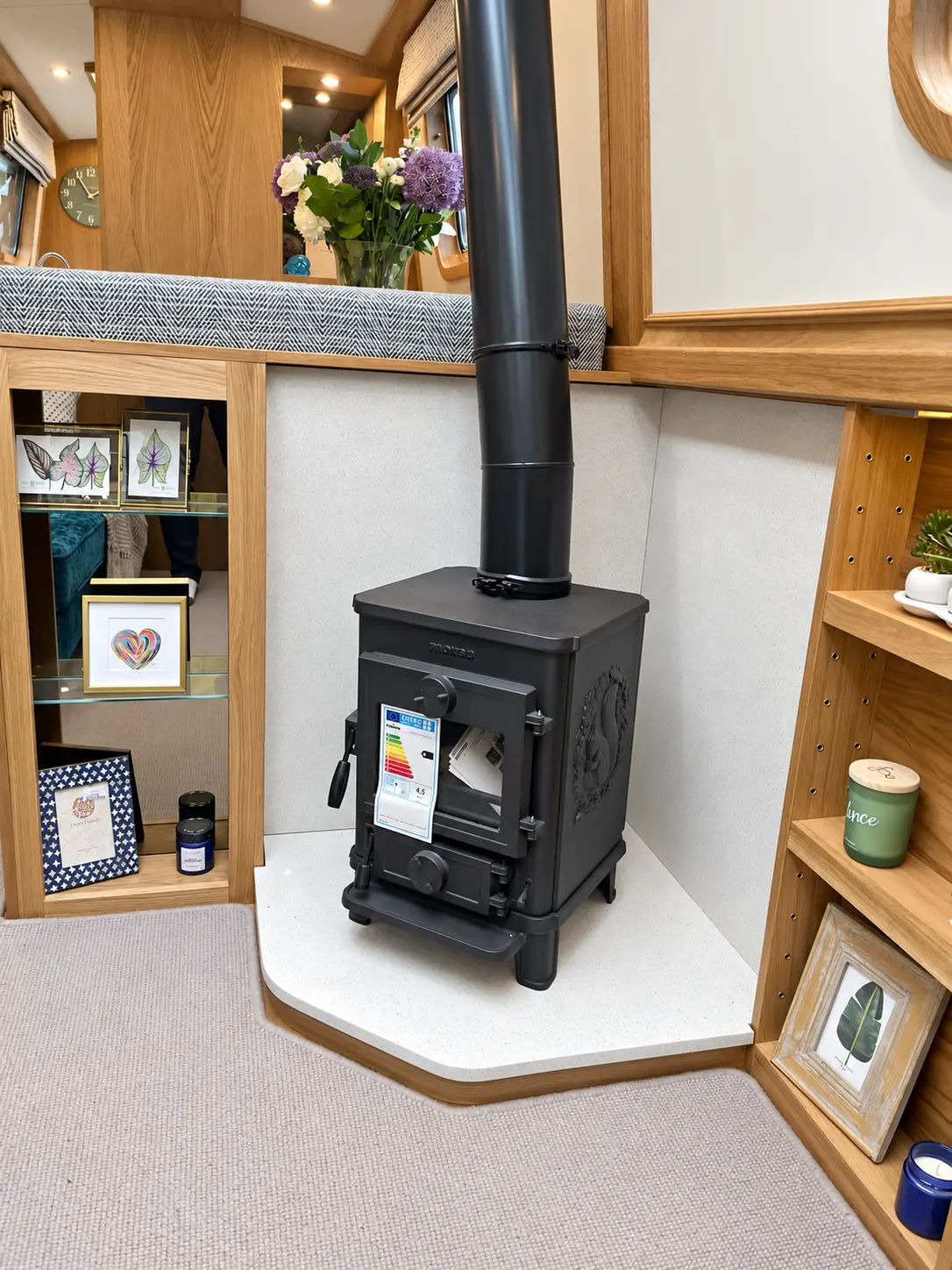
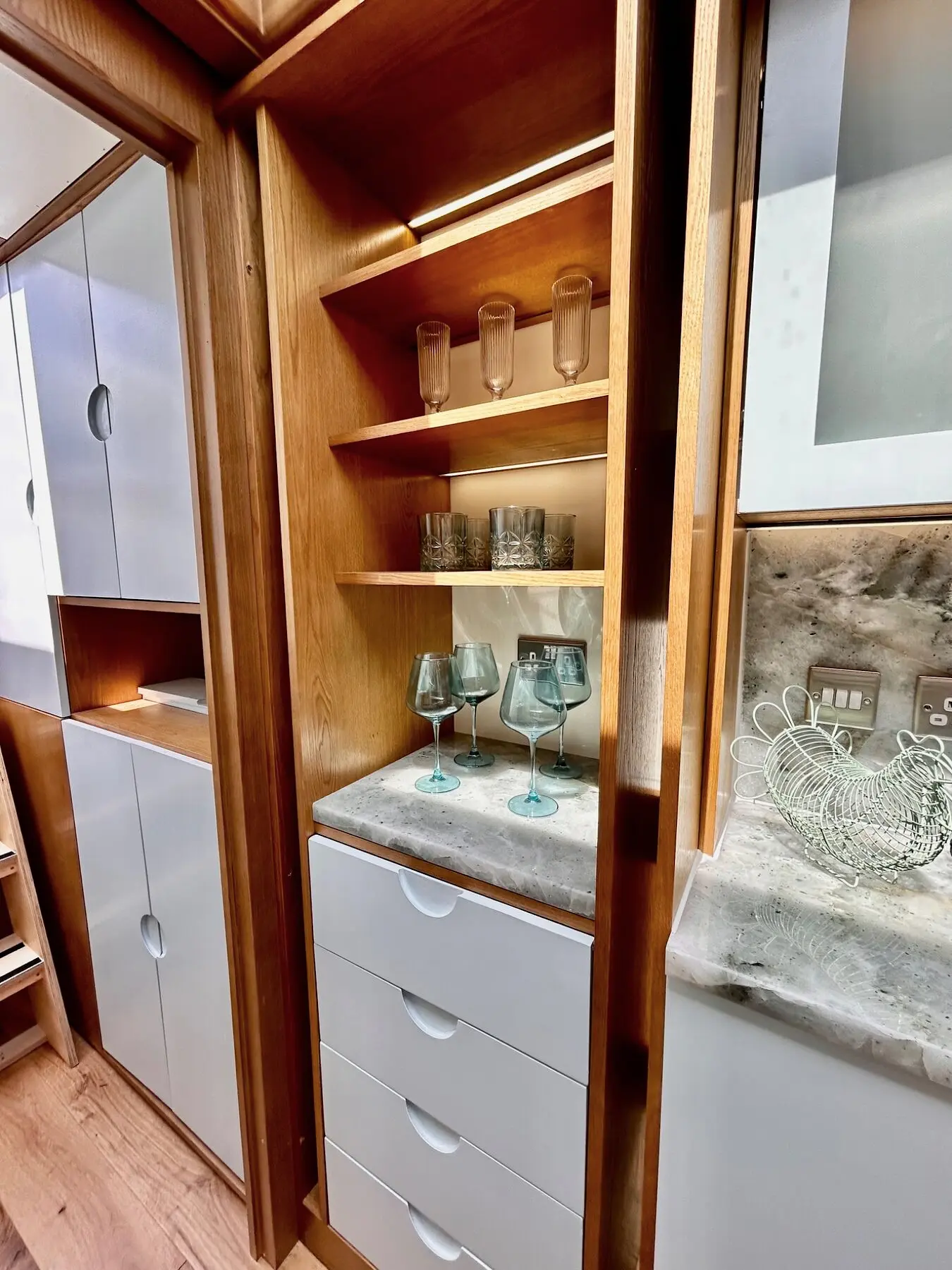
Begin with an inventory of categories rather than an abstract request for “more storage.” Coats and boots need ventilation near an entrance. Food storage belongs near preparation. Bedding needs dry, easily reached volume. Tools, hoses and cruising equipment should not migrate into the saloon.
Liveaboards also need space for laundry, paperwork, work equipment and possessions that change with the season. These requirements affect bulkheads, bed design, seating and the balance between tall cabinetry and open visual space.
Not every void should become a cupboard. Keeping selected areas visually quiet and open makes the storage that remains feel intentional, and prevents capacity from overwhelming the interior.
Clear answers help customers compare the right things before they commission.
Common opportunities include seating, beds, steps, tall cabinetry, galley units and carefully designed wall storage. Every option must preserve safe access and services.
Yes, when the lifting method, mattress, ventilation and frequency of access are resolved together.
That depends on the owners’ possessions and routines. An inventory-led design is more reliable than applying a generic quantity.
Continue with related Oakums guides, completed boats and practical information for planning your own narrowboat.
Begin your Oakums