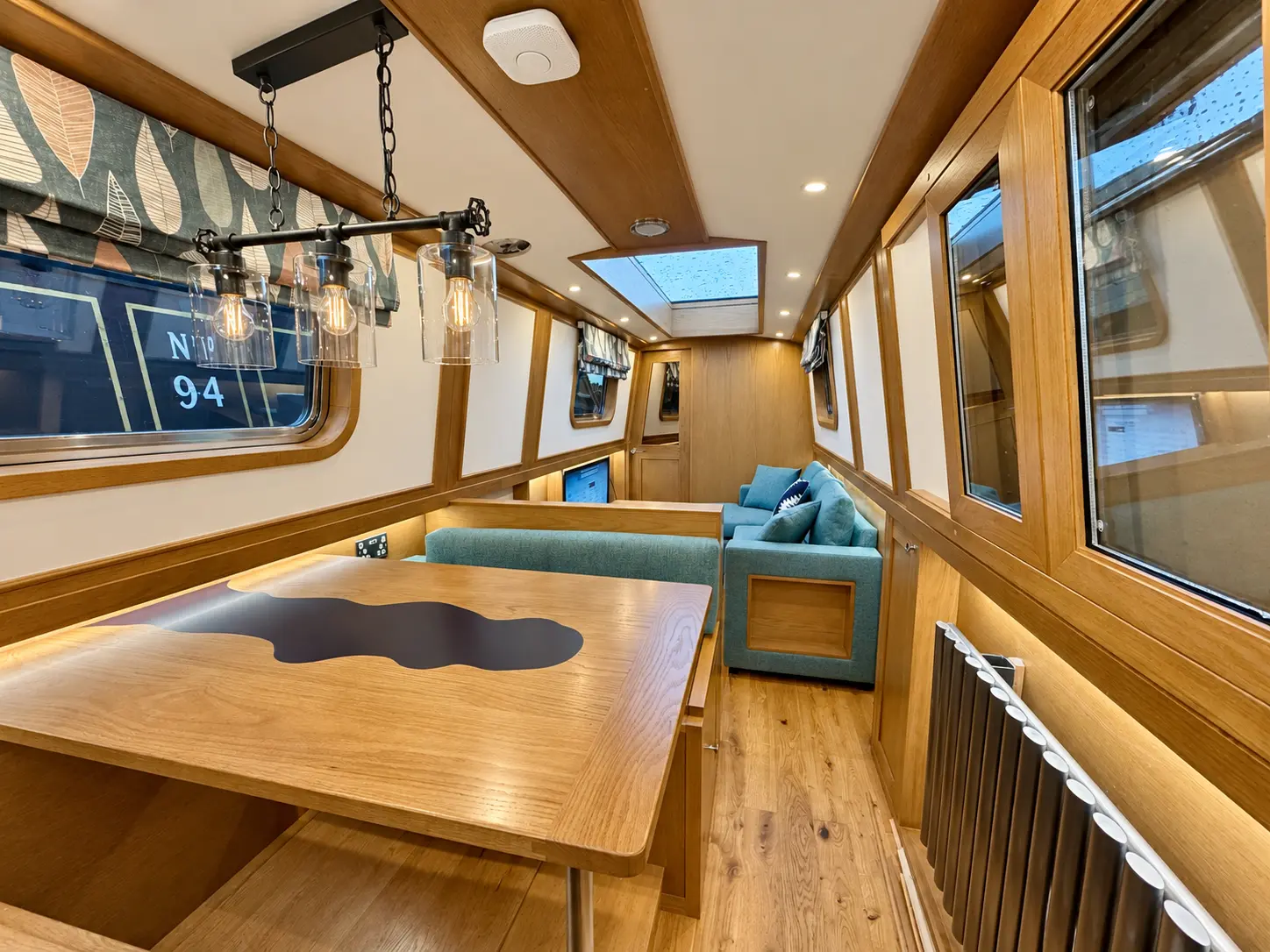
Windows and rooflights
Daylight first
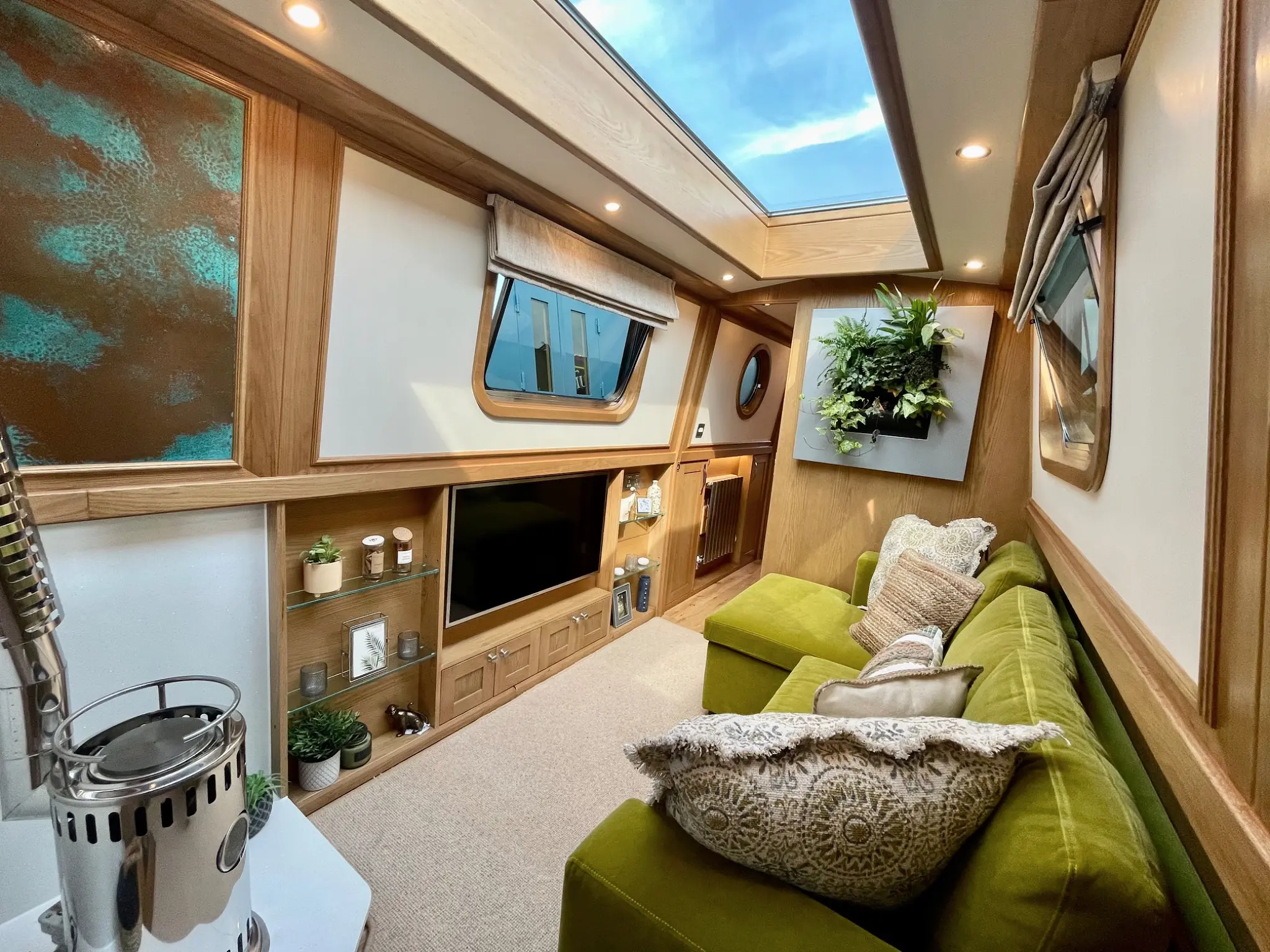
Natural light establishes orientation and generosity, with interior surfaces helping it travel through the boat.

Narrowboat lighting design
Oakums combines daylight, task lighting, warm ambient light and carefully chosen feature fittings to make narrowboat interiors work beautifully from morning to night.
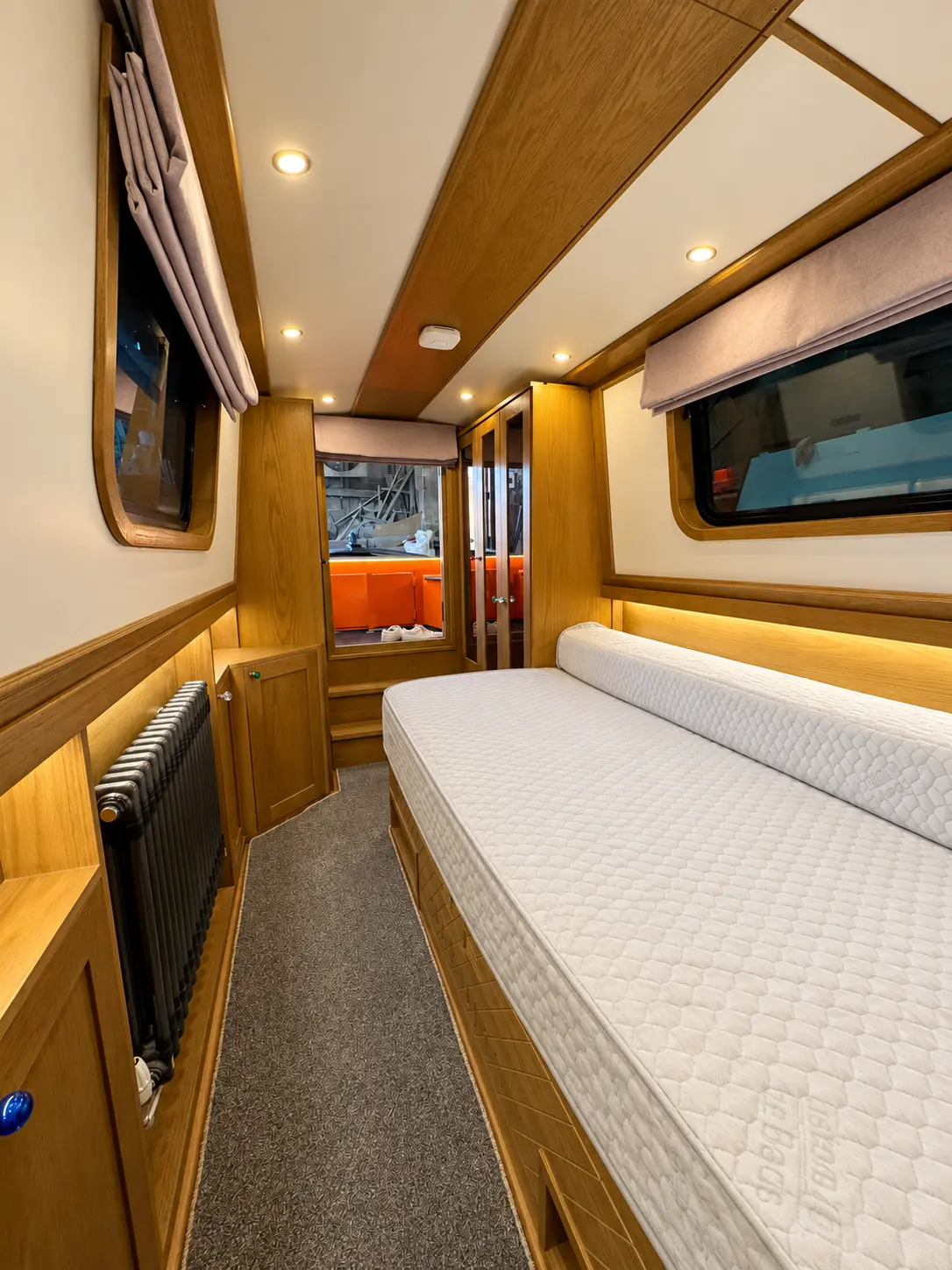
“Good lighting is noticed as atmosphere before it is noticed as equipment.”
One grid of ceiling spots cannot solve every need. Cooking, reading, dining, working and moving safely at night each ask for a different quality of light.
Natural light establishes orientation and generosity, with interior surfaces helping it travel through the boat.
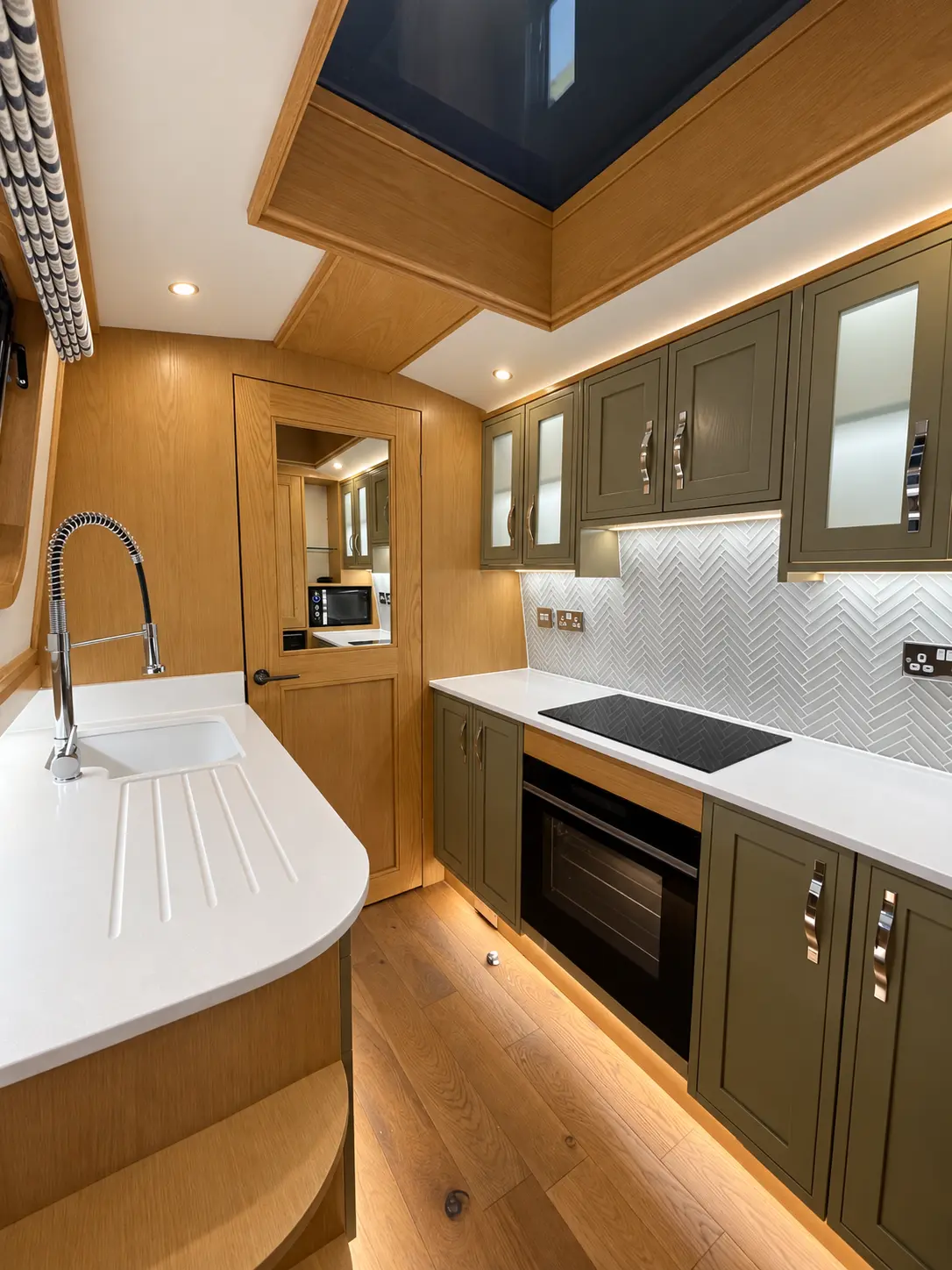
Worktop, mirror and reading light should reach the task without glare or unhelpful shadows.
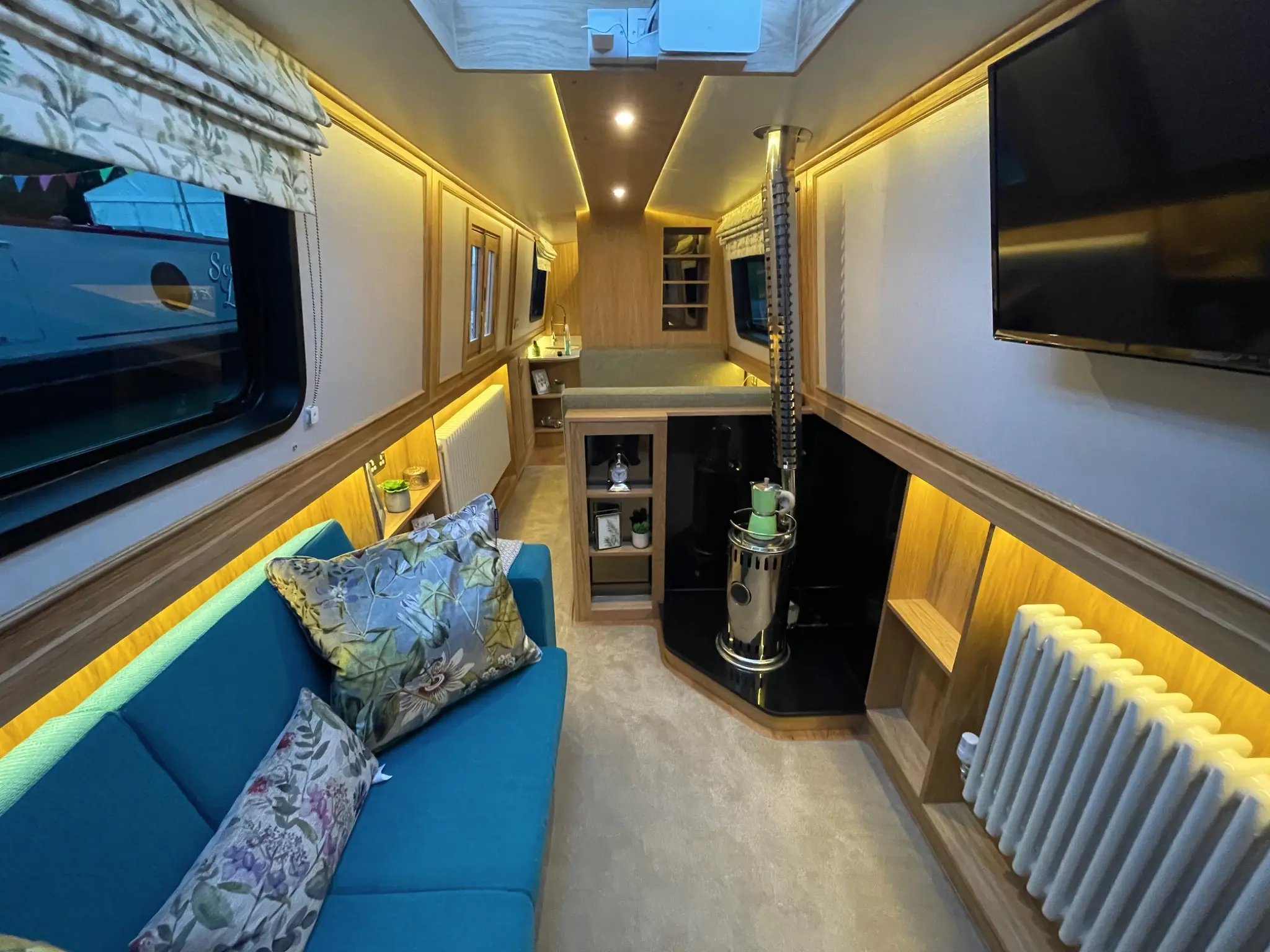
A pendant or feature fitting can anchor a dining area and establish character without filling the ceiling with objects.
Windows, rooflights, finishes and sightlines are considered before artificial lighting.
Focused light supports cooking, reading, grooming and working without over-lighting the whole interior.
Warm, indirect illumination gives the boat comfort and depth during the evening.
Useful switching and zoning make it simple to select the right atmosphere.
Design perspective
A narrowboat that looks bright in daytime photography can feel completely different after sunset. Warm pools of light, gentle contrast and independently controlled zones turn a functional interior into somewhere people want to settle.
Completed boats show how different briefs, palettes and priorities become individual interiors.
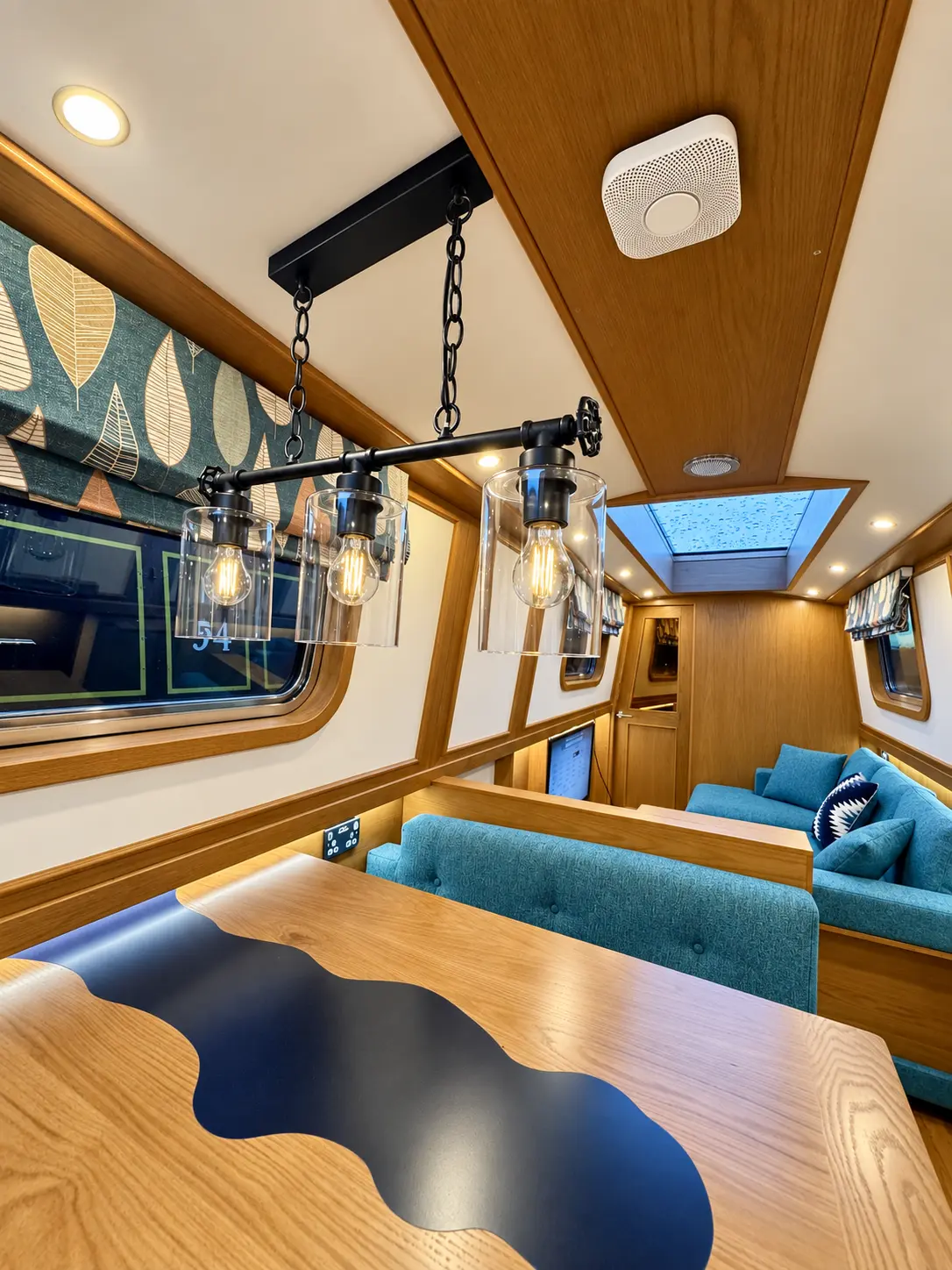
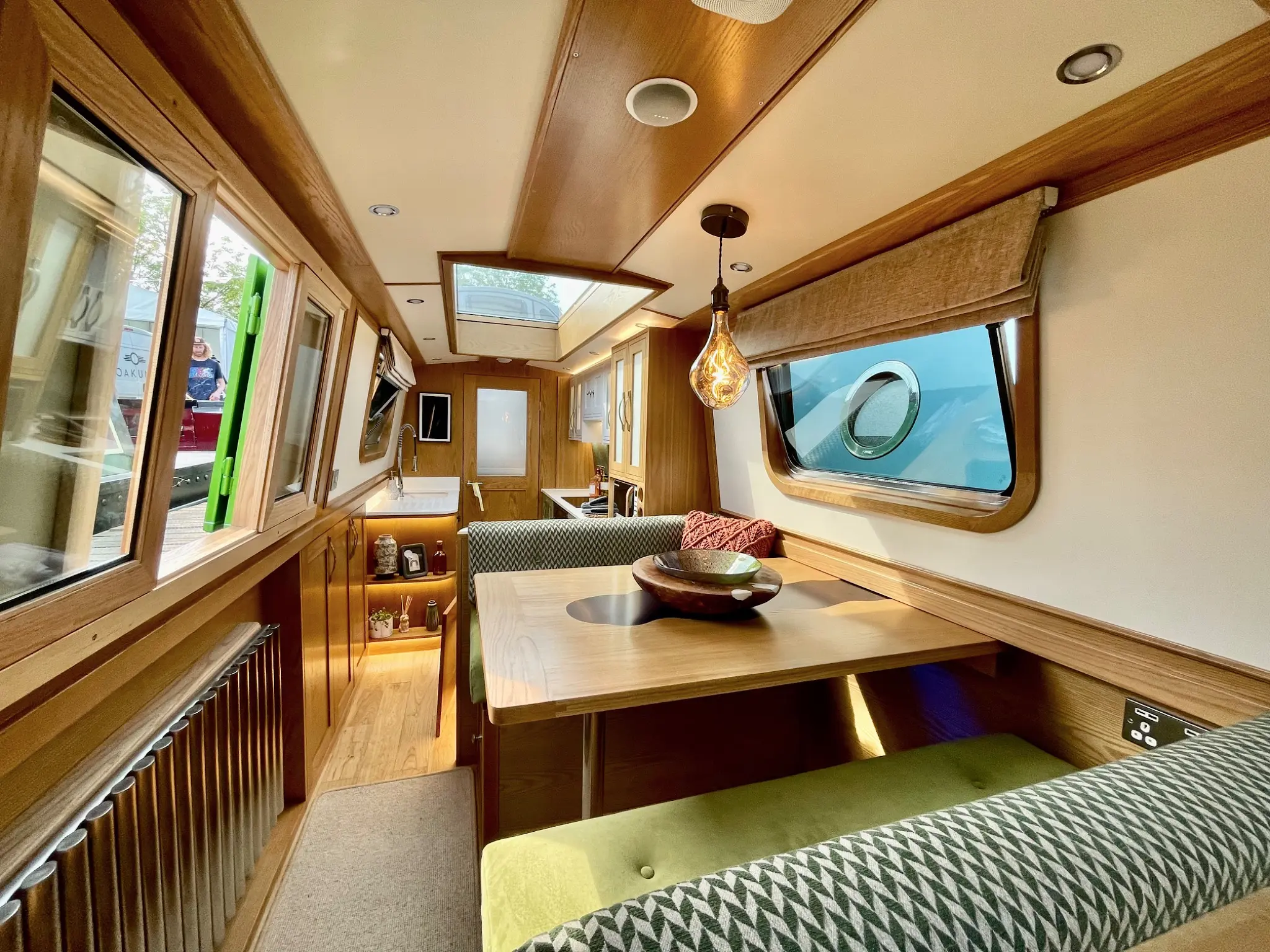
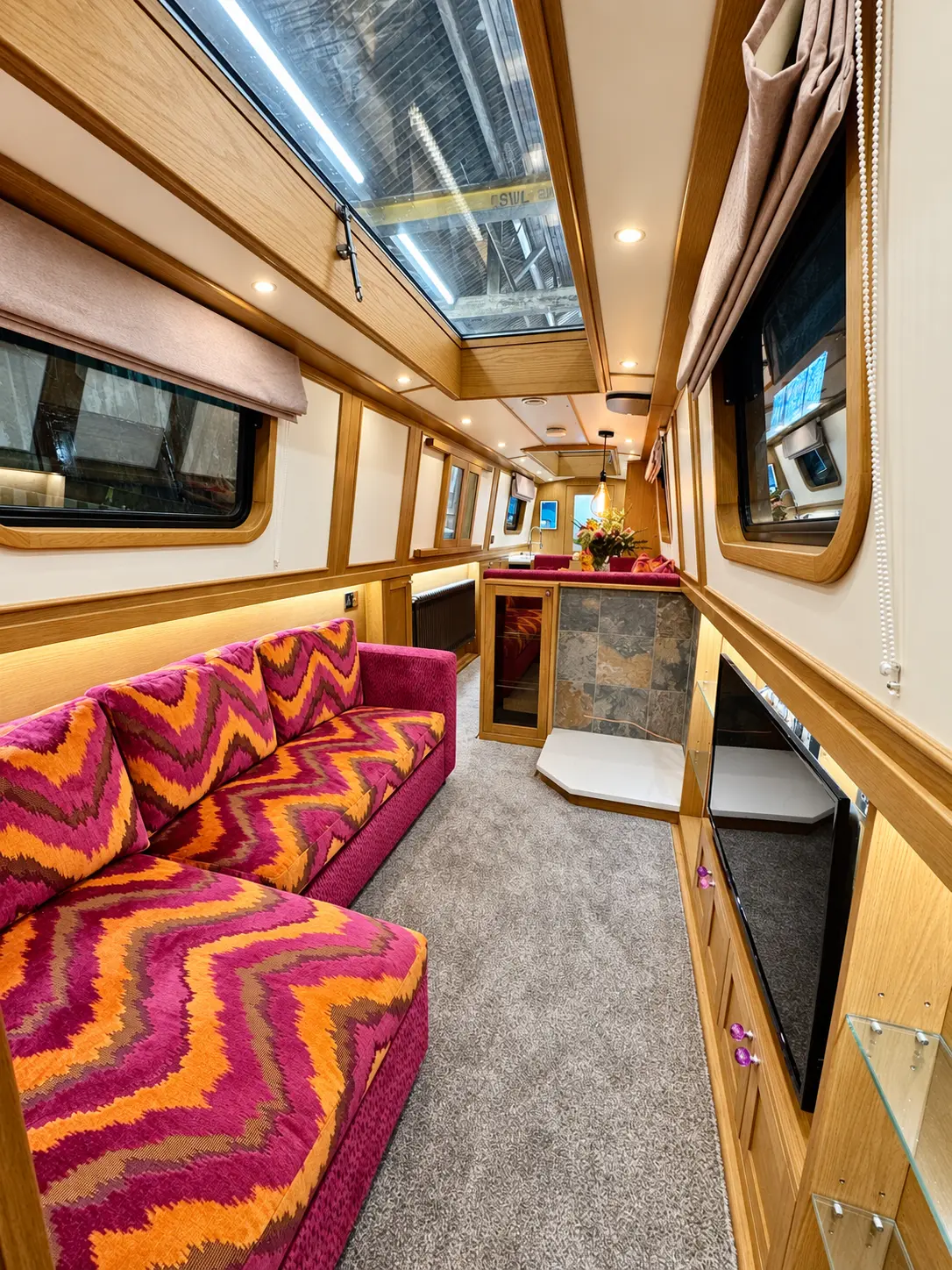
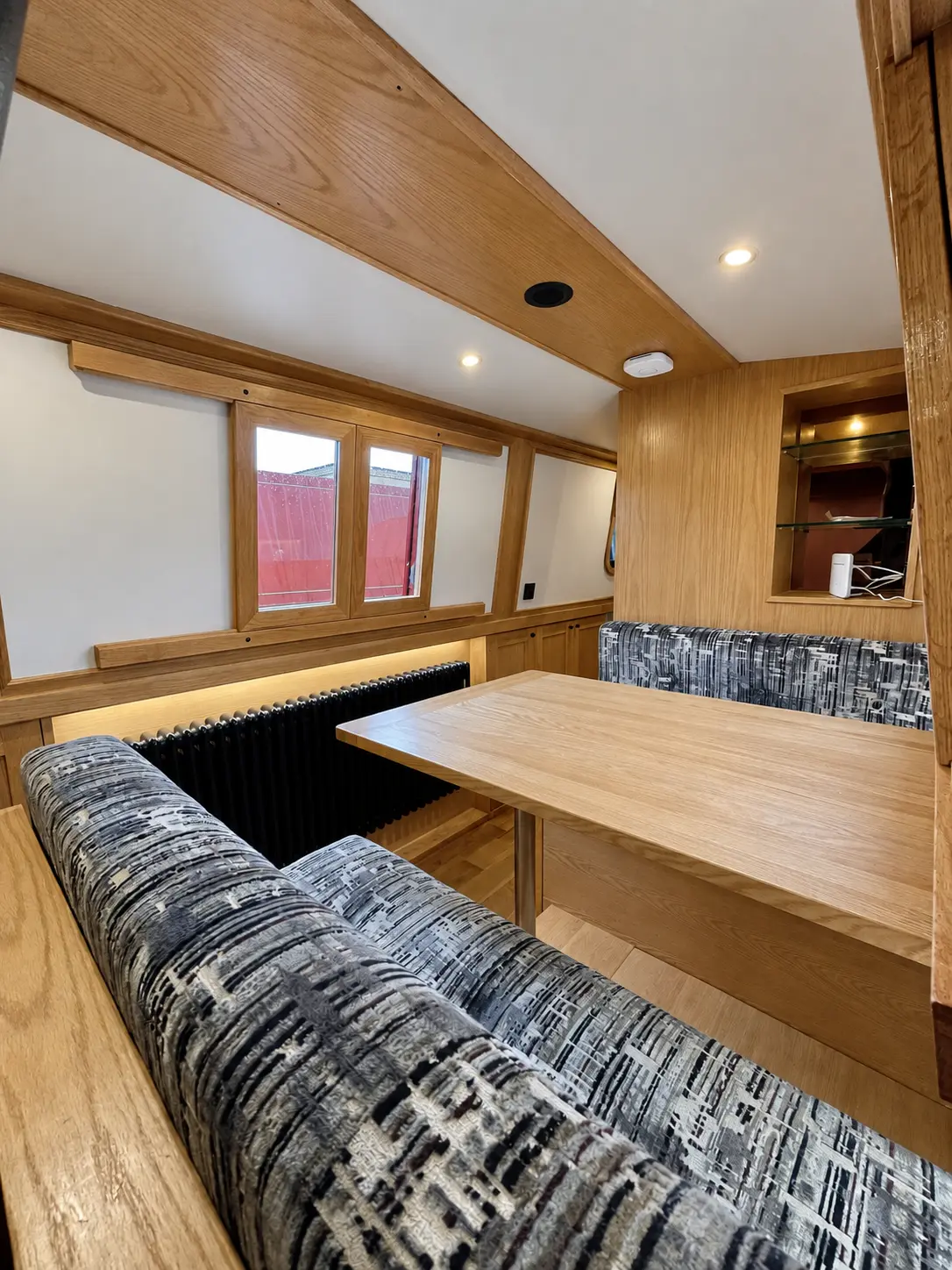
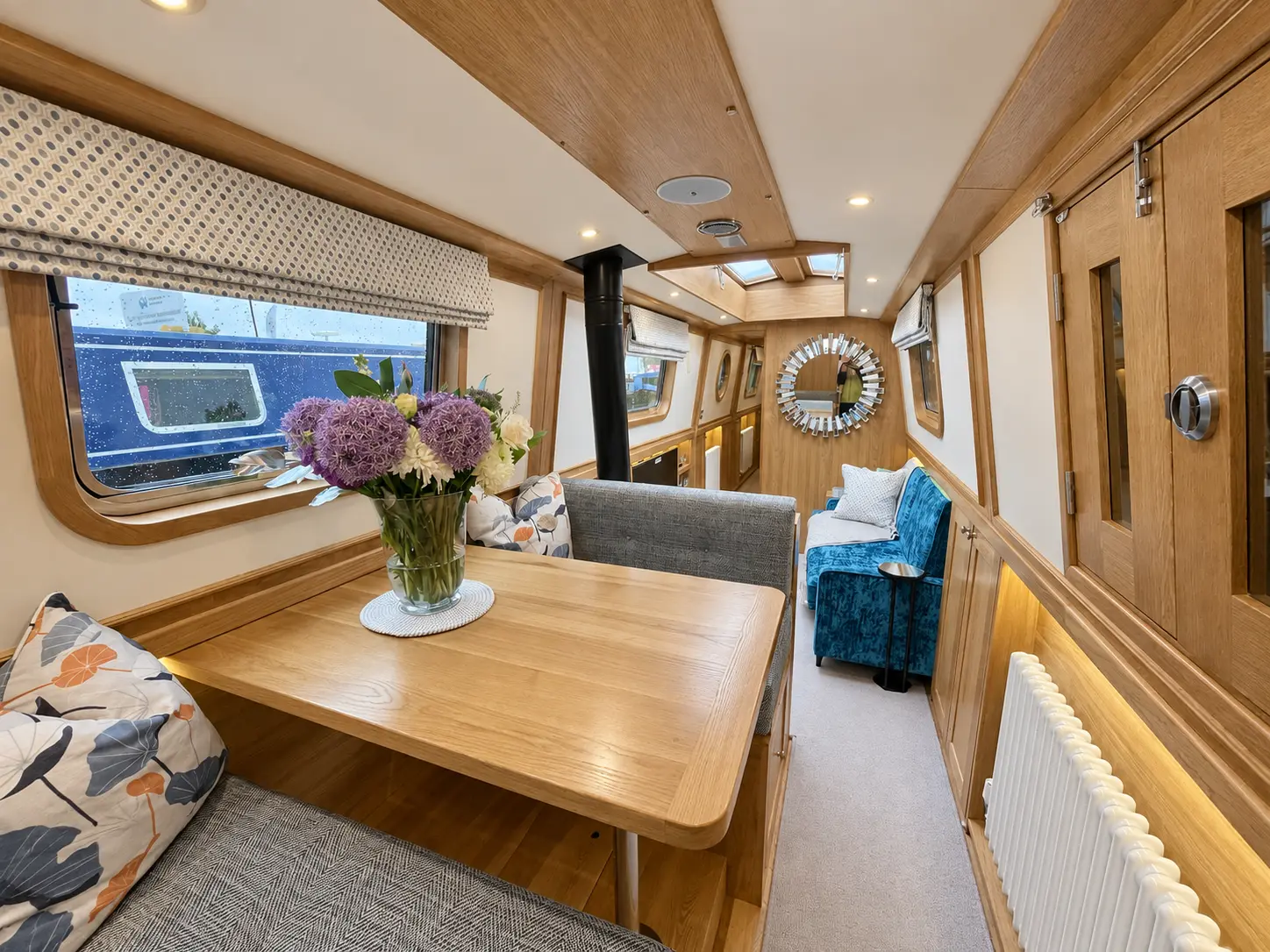
Lighting begins with the plan. Worktops need shadow-free illumination; seating needs comfortable reading light; mirrors need useful frontal light; and circulation routes need gentle guidance without waking the whole boat at night.
Colour temperature and material response matter. Warm timber, painted cabinetry, polished worktops and dark upholstery reflect light differently. Fittings therefore need to be considered against the actual palette rather than specified in isolation.
Good control makes a layered scheme usable. Instead of presenting every circuit at once, switches and zones should make the most common scenes obvious: arriving aboard, cooking, dining, relaxing and moving safely after dark.
Clear answers help customers compare the right things before they commission.
Warm-white lighting is often comfortable in living spaces, while task areas still need sufficient brightness and accurate colour. The complete palette should guide the final selection.
They can be, when headroom, movement, fixing and the table or surface below are coordinated carefully.
Yes. Appropriate circuits and controls can create practical and atmospheric scenes, subject to the agreed electrical design and compatible fittings.
Continue with related Oakums guides, completed boats and practical information for planning your own narrowboat.
Begin your Oakums